
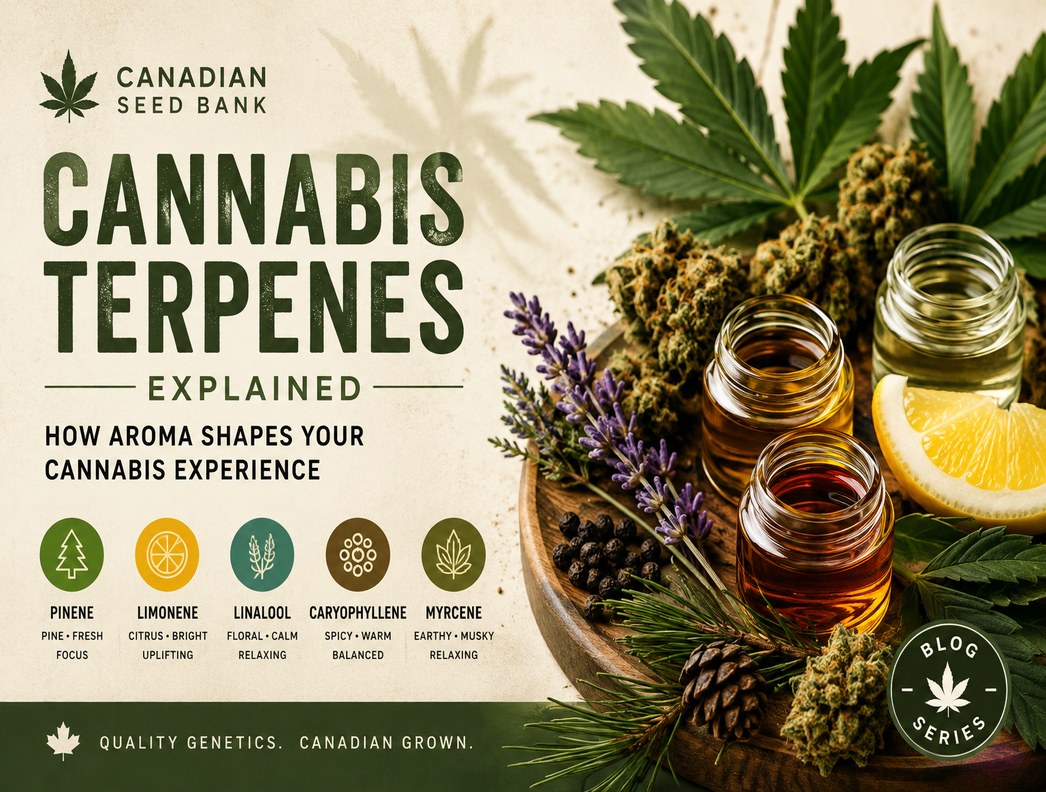
Cannabis Terpenes Explained:
How Aroma Shapes Your Cannabis Experience
When people first start exploring cannabis, most focus almost entirely on THC percentages. It's common to hear someone ask, "What's the strongest strain you have?" While THC certainly plays a significant role in the overall experience, experienced cannabis consumers know that potency is only one piece of a much larger puzzle.
The true personality of a cannabis strain comes from compounds called terpenes.
Terpenes are responsible for the unique aromas and flavors found in cannabis, from citrus and pine to berries, pepper, lavender, and even the unmistakable diesel scent found in some popular cultivars. More importantly, they are believed to influence how different strains make consumers feel when combined with cannabinoids like THC and CBD. This means two strains with nearly identical THC percentages can offer surprisingly different experiences based largely on their terpene profiles.
As cannabis research continues to evolve, terpenes are becoming one of the most discussed topics among growers, budtenders, medical patients, and recreational consumers alike.
What Are Terpenes?
Terpenes are naturally occurring aromatic compounds found throughout nature. They are produced by thousands of different plants, fruits, herbs, flowers, and even some insects. Their primary purpose is to create distinctive scents that serve various biological functions.
You've experienced terpenes every day without even realizing it.
Think about the smell of freshly cut lemons, the aroma of pine trees during a hike, the relaxing scent of lavender before bed, or the fresh fragrance of basil in your kitchen. These familiar scents all come from terpenes.
Cannabis simply happens to produce an exceptionally diverse range of these compounds, with scientists identifying well over 150 individual terpenes within the plant. Every strain contains its own unique combination, creating an almost endless variety of aromas and flavor profiles.
Why Do Cannabis Plants Produce Terpenes?
In nature, terpenes serve several important purposes beyond simply producing pleasant aromas.
They help protect cannabis plants from insects and herbivores, attract beneficial pollinators, defend against fungal infections, and even help the plant respond to environmental stress such as excessive heat or drought.
Some terpenes can also help discourage animals from feeding on the plant, while others attract insects that benefit the surrounding ecosystem. Nature has spent millions of years refining these chemical defenses.
For cultivators, terpene production is often viewed as an indicator of a healthy, carefully grown cannabis plant. Premium flower is usually recognized not only by its appearance but also by its rich, pungent aroma that fills the room as soon as the container is opened.
Terpenes vs THC
THC is the primary psychoactive cannabinoid responsible for the classic cannabis "high."
Terpenes themselves do not produce intoxication.
Instead, researchers believe terpenes may influence how cannabinoids interact with the body's endocannabinoid system. This concept is commonly known as the entourage effect, which suggests that cannabinoids, terpenes, and other naturally occurring compounds work together to create a more balanced and nuanced experience than THC alone.
Although research is still ongoing, countless consumers report that strains with similar THC levels often produce noticeably different effects due to their unique terpene compositions. This is one reason many experienced cannabis users pay just as much attention to terpene profiles as they do cannabinoid percentages.
The Most Common Cannabis Terpenes
Myrcene
Myrcene is often the most abundant terpene found in cannabis.
Common aromas
Earthy
Herbal
Musky
Cloves
Naturally found in:
Mangoes
Thyme
Hops
Lemongrass
Many consumers associate myrcene-rich strains with relaxation and evening use. While individual experiences vary, myrcene has earned a reputation for contributing to the classic "couch-lock" sensation often associated with certain indica-dominant cultivars.
Limonene
As the name suggests, limonene delivers bright citrus aromas that many people immediately recognize.
Common aromas
Lemon
Orange
Grapefruit
Naturally found in:
Citrus peels
Rosemary
Peppermint
Limonene-rich strains are frequently chosen by daytime consumers who appreciate vibrant flavors and refreshing aromas. The bright citrus scent also makes these strains particularly popular among new cannabis users.
Pinene
Pinene smells exactly like walking through a dense evergreen forest after a rainfall.
It exists in two forms:
Alpha-pinene
Beta-pinene
Naturally found in:
Pine needles
Rosemary
Basil
Dill
Pinene contributes a clean, crisp aroma that many consumers find refreshing. It is one of the most common terpenes found throughout nature and plays an important role in the familiar scent of forests.
Caryophyllene
Caryophyllene is one of the most fascinating terpenes discovered in cannabis.
Unlike most other terpenes, beta-caryophyllene has been shown to interact directly with CB2 receptors within the body's endocannabinoid system, making it unique among common cannabis terpenes.
Common aromas
Black pepper
Spice
Woody
Clove
Naturally found in:
Black pepper
Cinnamon
Oregano
Its spicy profile makes it relatively easy to identify, and many modern cannabis cultivars feature caryophyllene as one of their dominant terpenes.
Linalool
If you've ever enjoyed the relaxing scent of lavender, you've experienced linalool.
Common aromas
Floral
Lavender
Sweet herbs
Naturally found in:
Lavender
Coriander
Birch
Linalool contributes soft floral notes that stand out from the earthier aromas found in many cannabis strains. Many consumers enjoy these varieties during quiet evenings because of their pleasant fragrance.
Reading a Terpene Profile
Today, more licensed producers are providing terpene information directly on product packaging.
A terpene profile may look something like this:
Myrcene – 0.72%
Caryophyllene – 0.41%
Limonene – 0.38%
Pinene – 0.18%
While these percentages may appear small, terpenes are incredibly potent aromatic compounds. Even fractions of a percent can significantly influence how a cannabis product smells and tastes.
Many experienced consumers now compare terpene percentages before making a purchase rather than relying solely on THC levels.
Why Two 25% THC Strains Can Feel Completely Different
Imagine purchasing two dried flower products that both contain exactly 25% THC.
One strain is rich in limonene and pinene, creating a bright citrus aroma with fresh pine notes.
The second strain contains mostly myrcene and linalool, producing earthy, floral characteristics.
Although the THC percentage is identical, many consumers describe these products as providing very different overall experiences. This demonstrates why THC should be viewed as only one measurement of cannabis quality rather than the only factor worth considering.
How Storage Affects Terpenes
Terpenes are highly volatile compounds.
Exposure to excessive heat, oxygen, sunlight, and improper humidity can gradually cause terpenes to evaporate. As terpene levels decline, cannabis may lose much of its original aroma, flavor, and overall freshness.
To preserve terpene content:
Store cannabis in airtight glass containers.
Keep products in a cool, dark environment.
Avoid direct sunlight.
Minimize repeated exposure to oxygen.
Never leave cannabis in a hot vehicle for extended periods.
Proper storage not only helps preserve flavor but also allows consumers to enjoy the product much closer to how it was originally cultivated.
Terpenes Beyond Flower
Terpenes are present in far more than dried cannabis flower.
Consumers will also find terpene-rich products including:
Pre-rolls
Vape cartridges
Live resin
Live rosin
Cannabis concentrates
Full-spectrum oils
Some infused edible products
Live resin products have become especially popular because they are produced using fresh frozen cannabis, helping preserve more of the plant's original terpene profile than many traditional extraction methods.
Shopping Smarter
Instead of asking for the highest THC percentage, consider asking your budtender more detailed questions such as:
Which terpenes are most dominant?
Is this strain more fruity or earthy?
Does it have citrus, floral, or pine aromas?
Was it grown indoors or outdoors?
Was it harvested recently?
Is the terpene profile lab tested?
Is this cultivar known for preserving high terpene content?
These conversations often lead consumers to products that better suit their individual tastes and preferences.
The Future of Cannabis Selection
As cannabis science continues to expand, terpene education is becoming increasingly important.
Many industry experts believe future cannabis shopping will resemble the way enthusiasts purchase wine or craft coffee. Consumers will place greater emphasis on aroma, cultivation methods, terpene profiles, freshness, and overall quality rather than focusing exclusively on THC percentages.
Understanding terpenes allows consumers to make more informed purchasing decisions while developing a greater appreciation for the incredible complexity of the cannabis plant.
The next time you visit a dispensary, don't stop at the THC percentage. Take a moment to smell the product when possible, examine the terpene profile, ask questions, and explore the remarkable diversity that cannabis has to offer.
You may discover that your favorite cannabis product isn't necessarily the strongest one on the shelf. Instead, it may simply be the strain whose unique terpene profile best matches your personal preferences, making every session more enjoyable, flavorful, and memorable.