
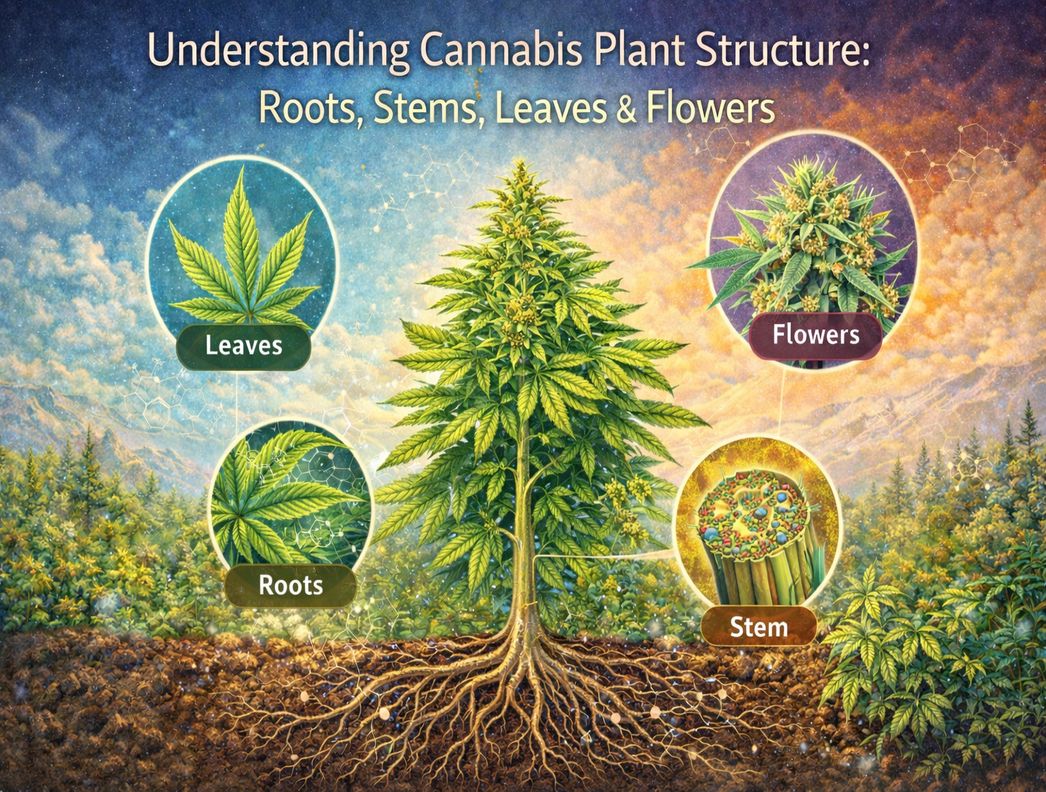
Understanding Cannabis Plant Structure
Understanding Cannabis Plant Structure: Roots, Stems, Leaves & Flowers
Every cannabis plant is a carefully organized biological system. Beneath its recognizable leaves and branching structure lies a coordinated network of roots, stems, and reproductive organs working together to support growth and genetic expression.
Understanding cannabis plant anatomy provides insight into how genetics shape physical traits, from plant height and leaf shape to overall structure and development patterns. This botanical perspective helps deepen appreciation for the complexity of the plant itself.
The Root System: The Hidden Foundation
Though often overlooked, roots are the foundation of the cannabis plant.
Primary Functions of Roots:
Anchor the plant securely in its growing medium
Absorb water and nutrients
Store energy reserves
Support overall stability
Genetics influence root development patterns, including root density, branching structure, and resilience. Some genetic lines naturally develop more aggressive root systems, while others grow more compact and concentrated beneath the soil surface. A strong root system supports structural growth above ground. In many ways, what happens below the surface determines how the plant expresses its potential above it.
The Stem: Structural Support and Transport
The stem acts as the plant’s central support column and transportation network.
Stem Functions:
Moves water from roots to leaves
Distributes nutrients throughout the plant
Provides physical support for branching
Determines plant height and spacing
Stem thickness, internodal spacing (distance between branches), and overall strength are heavily influenced by genetics. Some strains naturally exhibit tighter node spacing and compact growth, while others stretch vertically with wider gaps between branches. These structural traits are part of genetic identity and contribute to how different cannabis varieties are categorized botanically.
Leaves: The Energy Producers
Leaves are the plant’s energy engines. Through photosynthesis, they convert light into chemical energy that fuels growth and development.
Cannabis leaves are instantly recognizable due to their serrated edges and multi-fingered shape. However, leaf structure varies depending on genetic lineage.
Genetic Influence on Leaf Shape:
Broader leaves often appear in genetics adapted to cooler climates
Narrower leaves are commonly associated with genetics from equatorial regions
Leaf density can vary significantly between strain families
Leaf structure plays a role in light absorption efficiency and environmental adaptation. Over generations, cannabis evolved leaf patterns that supported survival in different climates.
Branching Patterns and Growth Structure
The way a cannabis plant branches is another genetically influenced trait. Some plants grow:
Short and bushy
Tall and slender
Balanced with moderate branching
These growth patterns reflect evolutionary adaptations to regional environments. Mountainous regions favored compact structures, while tropical regions supported taller, more elongated plants. Breeders observe these structural traits closely when selecting parent plants for stability and consistency.
Flowers: Reproductive Expression
The flowering stage represents the plant’s reproductive phase. In botanical terms, cannabis is a dioecious species, meaning male and female reproductive organs typically grow on separate plants. Female plants produce flowers that contain resin glands. These glands house cannabinoids and terpenes, which are also genetically determined. Flower structure varies based on:
Genetic lineage
Environmental conditions
Development timing
Some genetics produce denser flower clusters, while others develop longer, more elongated formations. These structural differences are part of the plant’s inherited blueprint.
How Structure Reflects Genetics
Plant structure is not random. Every aspect, root development, stem strength, leaf shape, branching style, and flower formation, reflects the genetic instructions encoded within the seed. This relationship is often described through:
Genotype → Phenotype
The genotype (genetic code) determines potential. The phenotype (observable structure) reflects how that potential expresses itself under specific environmental conditions. Understanding anatomy helps explain why plants from different genetic backgrounds can look distinct, even before flowering begins.
A Botanical Perspective
Viewing cannabis through a botanical lens highlights its sophistication as a plant species. It is not defined by a single characteristic, but by a coordinated system of structures working together to ensure survival and reproduction. For seed-focused brands and enthusiasts of plant science, understanding plant anatomy reinforces the importance of strong, stable genetics. Structure begins at the seed -- and the seed carries the blueprint for everything that follows