
The Role of Terpenes
The Role of Terpenes in Cannabis Genetics
When discussing cannabis genetics, cannabinoids often receive most of the attention. However, another equally important component plays a critical role in plant identity, evolution, and breeding: terpenes.
Terpenes are aromatic compounds found throughout the plant kingdom. In cannabis, they contribute to scent, plant resilience, and genetic differentiation. Understanding terpenes from a botanical and breeding perspective reveals how deeply they are tied to cannabis genetics -- far beyond aroma alone.
What Are Terpenes?
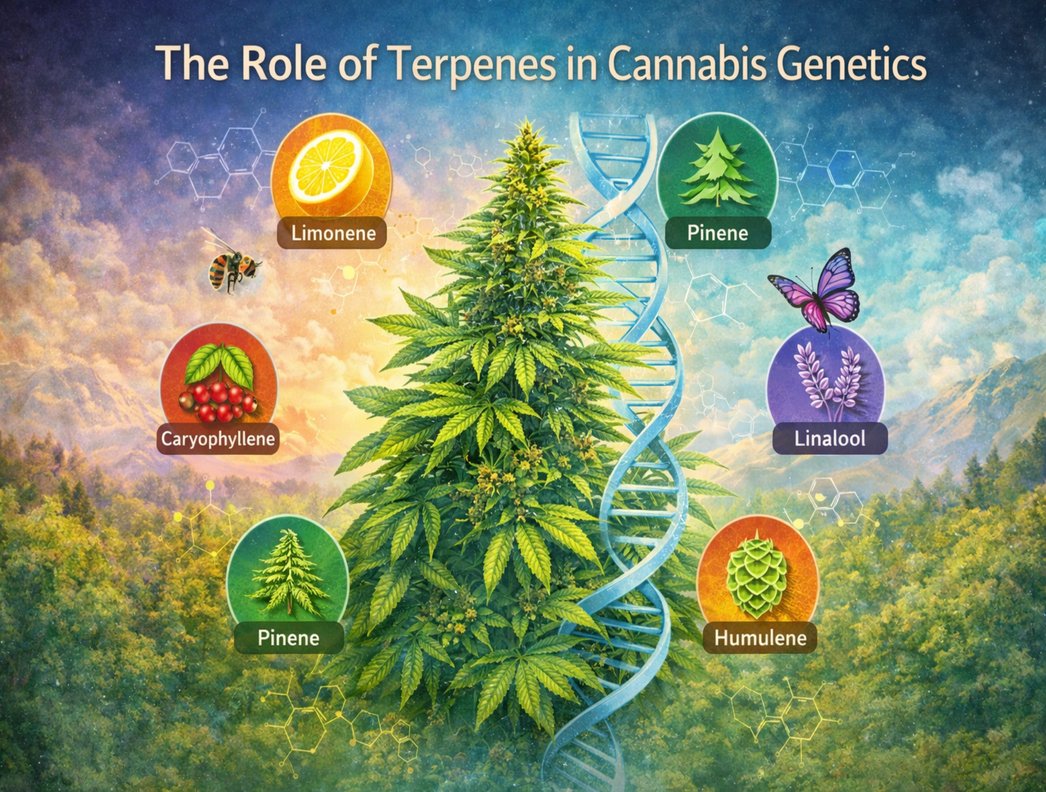
Terpenes are naturally occurring organic compounds produced in the resin glands of many plants, including cannabis. They are responsible for the distinctive scents associated with different botanical species: citrus, pine, spice, earth, floral notes, and more. Cannabis produces dozens of identifiable terpenes, including:
Myrcene
Limonene
Pinene
Caryophyllene
Linalool
Humulene
Each strain expresses a unique terpene profile, influenced by its genetic lineage and environmental conditions.
Terpenes as Genetic Markers
From a breeding perspective, terpenes function almost like genetic fingerprints. Just as plant structure and flowering time are inherited traits, terpene profiles are also genetically encoded. When breeders cross two strains, they are not only combining cannabinoid potential: they are blending terpene expression patterns as well. This is why certain aromatic traits consistently appear in specific genetic lines. For example:
Pine-forward strains often trace back to particular regional genetics.
Earthy or musky profiles may connect to traditional landrace lines.
Citrus-heavy strains often share related ancestry.
Terpenes help preserve and identify genetic heritage within breeding programs.
Evolutionary Purpose of Terpenes
Terpenes did not evolve for human appreciation. In nature, they serve protective and adaptive functions. Across plant species, terpenes may:
Deter herbivores
Attract pollinators
Protect against environmental stress
Contribute to UV resilience
Support plant-to-plant signaling
In cannabis specifically, terpene expression likely evolved as a survival mechanism in diverse climates; from mountainous regions of Central Asia to tropical environments near the equator. Different growing environments encouraged different terpene dominance, shaping the aromatic diversity seen in landrace strains.
Breeding for Terpene Expression
Modern cannabis breeding increasingly emphasizes terpene preservation and enhancement. Breeders may select parent plants based on:
Stability of terpene output
Uniqueness of aromatic profile
Consistency across generations
Environmental adaptability
Unlike early breeding that focused primarily on yield or cannabinoid levels, modern genetic refinement often includes terpene balance as a core objective. This shift reflects a broader understanding of cannabis as a chemically complex plant rather than a single-compound crop.
The Relationship Between Cannabinoids and Terpenes
Cannabinoids and terpenes are produced in the same glandular structures of the plant. While they are chemically distinct compounds, they develop within interconnected biological systems. Breeding decisions that influence cannabinoid production can also impact terpene expression. As a result, strain identity is shaped by a combined genetic profile rather than a single measurable trait. This complexity is why two plants with similar cannabinoid levels may exhibit entirely different structural, aromatic, and genetic characteristics.
Preserving Terpene Diversity in Cannabis Genetics
As breeding narrows around a limited number of popular genetic lines, preserving terpene diversity becomes increasingly important. Maintaining diverse terpene profiles supports:
Genetic resilience
Broader breeding potential
Agricultural adaptability
Long-term biodiversity
For seed banks, protecting terpene-rich genetics helps safeguard the plant’s evolutionary legacy while supporting future innovation.
A Deeper Layer of Cannabis Science
Terpenes represent one of the most fascinating layers of cannabis genetics. They reflect the plant’s evolutionary history, environmental adaptation, and breeding progression. Understanding terpene expression moves the conversation beyond simple strain labels and toward a more sophisticated appreciation of cannabis as a dynamic and genetically complex species. For those interested in cannabis genetics, terpenes are not just about aroma -- they are about identity.