
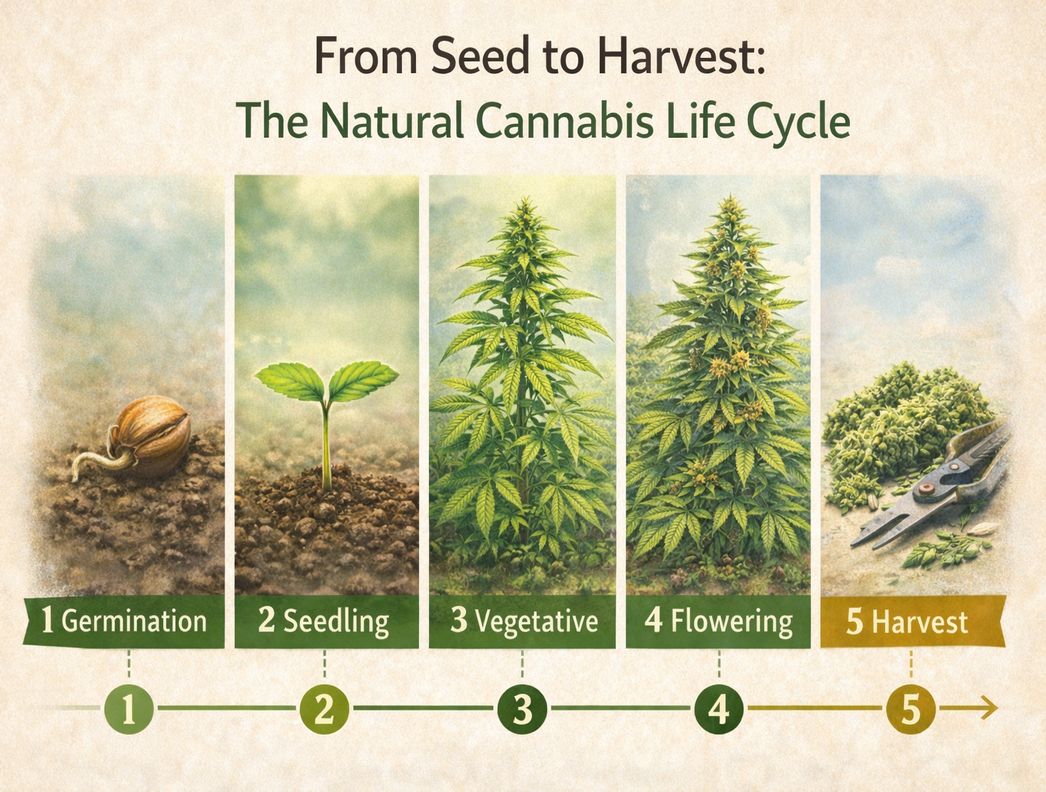
From Seed to Harvest
The Natural Cannabis Life Cycle
Every cannabis plant begins the same way -- as a seed. Within that small, protective shell lies the full genetic blueprint of the plant’s future structure, growth pattern, and potential characteristics. Understanding the natural life cycle of cannabis provides insight into how genetics express themselves over time and why seed quality matters from the very beginning. While cultivation methods may vary, the cannabis life cycle follows a predictable biological progression. Here’s a clear overview of how the process unfolds.
1️⃣ Germination: The Beginning of Growth
The cannabis life cycle begins when a viable seed is exposed to the right environmental conditions. During germination, moisture activates the seed’s internal processes, signaling it to begin growth. As the seed awakens:
The outer shell softens
A small root (radicle) emerges
The seed begins its transformation into a seedling
This stage is delicate, as the plant transitions from dormancy to active growth. Strong genetics and proper care during this phase set the tone for everything that follows.
2️⃣ Seedling Stage: Establishing Structure
Once the initial root anchors into its growing medium, the plant enters the seedling stage. Small, rounded leaves known as cotyledons appear first, followed by the plant’s first “true” serrated leaves. During this phase:
The root system develops
The plant focuses on vertical growth
Early leaf structure forms
Seedlings are small but biologically active, establishing the foundation for future growth. Stability and consistency during this stage help promote healthy development.
3️⃣ Vegetative Stage: Rapid Expansion
The vegetative stage is where the cannabis plant truly begins to expand. Leaves grow larger and more numerous, stems thicken, and the plant increases in height and width. Key characteristics of this stage include:
Strong root development
Branch formation
Rapid leaf production
Structural strengthening
This is when a plant’s genetic traits become more visible. Differences in height, leaf shape, spacing, and growth patterns begin to reflect whether the plant expresses more indica, sativa, or hybrid characteristics. The vegetative stage is essential for building the plant’s overall framework before flowering begins.
4️⃣ Flowering Stage: Genetic Expression
As the plant transitions into the flowering stage, its energy shifts from structural growth to reproductive development. This stage reveals the plant’s full genetic potential. During flowering:
Bud sites develop
Resin production increases
Aromatic compounds become more pronounced
The plant’s structure stabilizes
Flowering is where cannabinoid and terpene profiles are expressed. While genetics determine the plant’s potential, environmental factors influence how those traits fully develop. This stage requires patience, as maturation takes time and varies depending on strain lineage.
5️⃣ Maturation and Harvest
The final phase of the life cycle occurs when the plant reaches peak maturity. Signs of readiness vary by strain, but generally reflect full development of the plant’s reproductive structures. At this point:
Growth slows
Resin production stabilizes
The plant completes its biological cycle
The life cycle concludes, but the process begins again with seeds, continuing the generational chain of cannabis genetics.
Why Understanding the Life Cycle Matters
Understanding the cannabis life cycle helps growers appreciate the importance of strong genetics and proper care. Each stage builds upon the last, and healthy progression depends on starting with quality seeds.
For seed banks, the life cycle represents more than just plant growth -- it reflects the preservation and continuation of cannabis genetics across generations. From a single seed to full maturity, the cannabis plant follows a remarkable natural progression. Respecting that cycle is the foundation of responsible cultivation.