
Hemp vs Cannabis
Hemp vs Cannabis: What’s the Difference?
The terms hemp and cannabis are often used interchangeably, but they are not the same thing. While both come from the Cannabis sativa plant species, their cultivation, chemical composition, and historical uses differ significantly. Understanding the distinction helps clarify common misconceptions and provides important context for how these plants are used today.
The Botanical Relationship
Botanically speaking, hemp and cannabis belong to the same plant family. In fact, hemp is a type of cannabis. The key difference lies in how the plant is cultivated and the specific traits it expresses. Over time, humans selectively bred cannabis plants for different purposes. Some varieties were optimized for fiber and industrial use -- these are what we commonly call hemp. Others were cultivated for their resin production and cannabinoid content: these are typically referred to as cannabis in modern conversation. Though genetically related, selective breeding has created clear functional differences between the two.
The THC Threshold
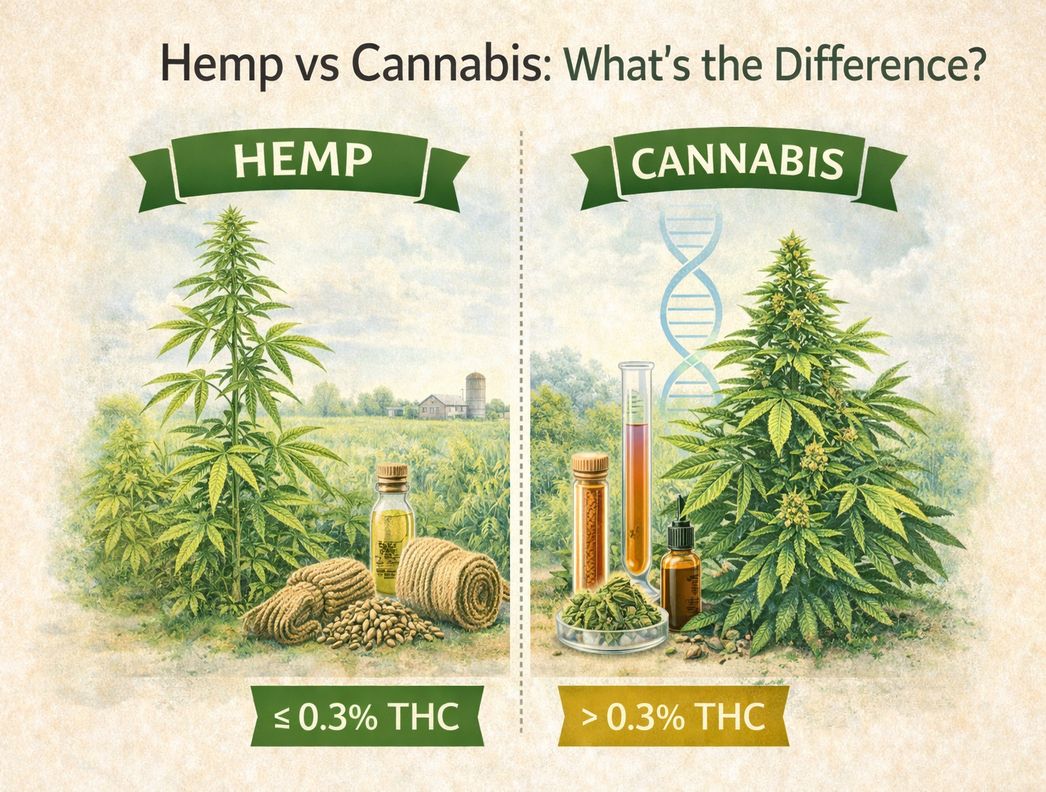
One of the primary legal distinctions between hemp and cannabis is THC content. In Canada, hemp is defined as cannabis containing 0.3% THC or less. THC (tetrahydrocannabinol) is the compound most commonly associated with psychoactive effects. Because hemp contains very low levels of THC, it is not considered intoxicating. Cannabis varieties cultivated for higher THC content exceed this threshold and are regulated differently under Canadian law. This THC limit is what legally separates hemp from other cannabis varieties, even though they are botanically connected.
Differences in Appearance and Growth
Hemp and cannabis plants often look different due to how they are grown and what traits they were bred to emphasize.
Hemp plants:
Tall and slender
Minimal branching
Grown closely together in fields
Focused on fiber or seed production
Cannabis plants:
Shorter and bushier
Dense branching
Cultivated with more spacing
Bred for resin production and cannabinoid profiles
These structural differences reflect the plant’s intended agricultural use.
Industrial Uses of Hemp
Hemp has been cultivated for thousands of years for its durability and versatility. Historically and today, hemp is used for:
Rope and textiles
Paper production
Building materials
Bioplastics
Food products (such as hemp seeds and oil)
Hemp’s strong fibers and sustainable growth cycle make it a valuable agricultural crop worldwide.
Cannabis and Specialized Cultivation
Cannabis varieties bred for higher cannabinoid expression are cultivated differently, often in more controlled environments. These plants are selected for traits such as aroma, resin production, and specific genetic profiles. While hemp is typically harvested for fiber and seed, cannabis plants are cultivated for different plant characteristics, depending on their genetic lineage.
A Shared History, Different Roles
Despite modern distinctions, hemp and cannabis share a deep historical connection. Ancient civilizations used hemp for textiles and tools, while cannabis varieties were incorporated into traditional medicine and cultural practices. As legal frameworks evolved, clearer definitions were created to distinguish industrial hemp from other cannabis types. Today, these classifications help regulate agriculture, trade, and research.
Why Understanding the Difference Matters
Clarity around hemp and cannabis supports informed conversations and responsible regulation. While they originate from the same species, their breeding history, chemical composition, and applications have led them down different agricultural paths. Understanding these differences highlights the plant’s remarkable versatility and the importance of precise terminology when discussing cannabis in any context.