
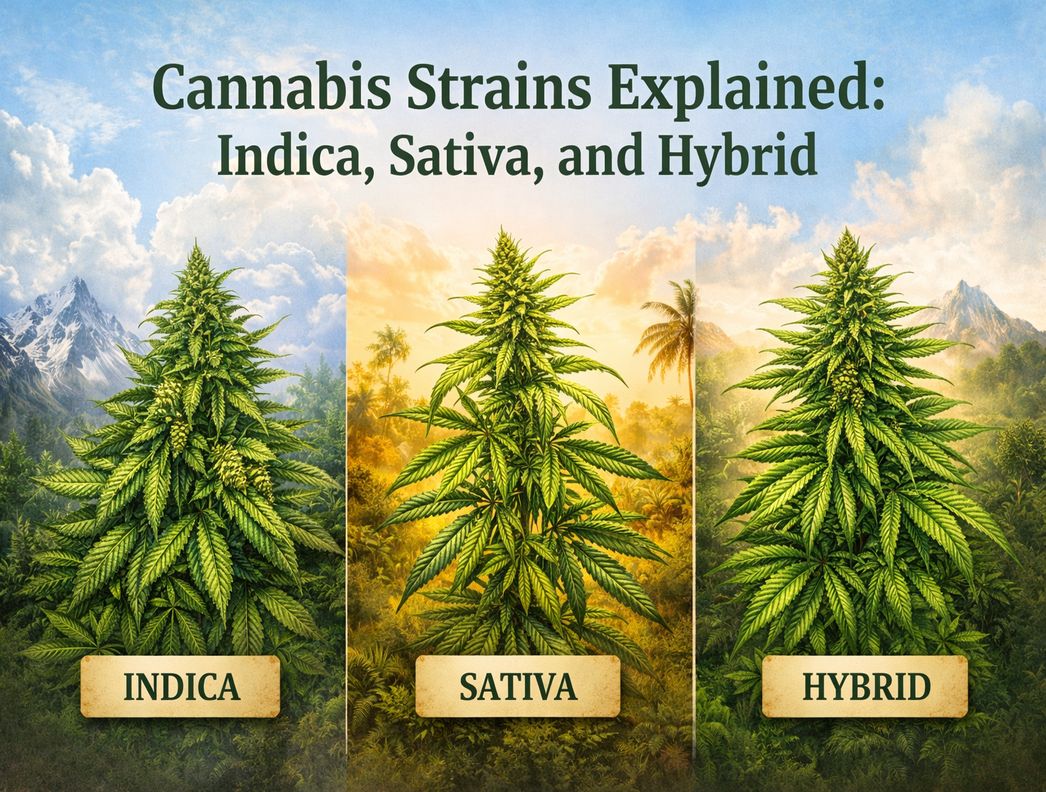
Cannabis Strains Explained
Indica, Sativa, and Hybrid
Understanding cannabis strains is one of the first steps for anyone exploring the plant. While modern cannabis genetics are far more complex than simple labels, the terms Indica, Sativa, and Hybrid remain useful for describing a plant’s historical origins, physical characteristics, and typical consumer preferences. This guide breaks down each strain type in a clear, beginner-friendly way.
Indica Strains: Compact and Resilient
Indica strains are believed to have originated in the mountainous regions of Central Asia, including areas such as Afghanistan, Pakistan, and northern India. These regions have harsh climates, which influenced the plant’s physical structure.
Growth Characteristics:
Indica plants tend to be short, bushy, and sturdy, with broad leaves and dense foliage. They typically have a shorter flowering time, making them popular among cultivators in cooler climates or with limited growing space.
Historical Use:
Historically, Indica varieties were valued for their resin production and durability. Many traditional hash-producing regions relied heavily on Indica genetics due to their high resin output.
Common Consumer Preferences:
Indica strains are often associated with evening or nighttime use and are commonly chosen by consumers looking for relaxing or calming experiences. Their compact growth structure also makes them popular among indoor growers.
Sativa Strains: Tall and Energetic
Sativa strains trace their origins to equatorial regions such as Southeast Asia, Central America, South America, and parts of Africa. These regions experience long growing seasons and abundant sunlight.
Growth Characteristics:
Sativa plants are typically tall and slender, with narrow leaves and longer flowering cycles. Because of their height and extended growth period, they are often better suited for outdoor cultivation in warm climates.
Historical Use:
In many cultures, Sativa varieties were traditionally used during the daytime for social, creative, or ceremonial purposes. Their growth patterns evolved to thrive in open environments with consistent sunlight.
Common Consumer Preferences:
Sativa strains are frequently associated with uplifting or energizing experiences and are often preferred for daytime use. Due to their size, they are more commonly grown outdoors or in larger cultivation spaces.
Hybrid Strains: The Best of Both Worlds
Hybrid strains are the result of selectively breeding Indica and Sativa genetics. As cannabis cultivation advanced, breeders began combining traits from both types to create plants with specific characteristics.
Growth Characteristics:
Hybrids can vary widely in size, flowering time, and structure depending on their genetic makeup. Some lean Indica-dominant, others Sativa-dominant, while balanced hybrids aim to blend traits evenly.
Why Hybrids Exist:
Hybridization allows breeders to improve consistency, resilience, yield, and adaptability. Most modern cannabis strains available today fall into the hybrid category.
Common Consumer Preferences:
Hybrids appeal to a broad audience because they offer flexibility. Consumers can choose strains based on genetic dominance, growth traits, or intended use rather than being limited to one category.
Understanding Strain Labels Today
While Indica, Sativa, and Hybrid remain helpful classifications, modern cannabis genetics are highly refined. Factors such as cannabinoid content, terpene profiles, and cultivation methods play a significant role in the final characteristics of a plant. For beginners, these strain categories provide a reliable starting point for understanding cannabis and exploring different genetic options.
A Foundation for Exploration
Whether you’re learning about cannabis for the first time or deepening your knowledge, understanding Indica, Sativa, and Hybrid strains builds a strong foundation. As research and breeding continue to evolve, these classifications remain an important part of cannabis education and history.