
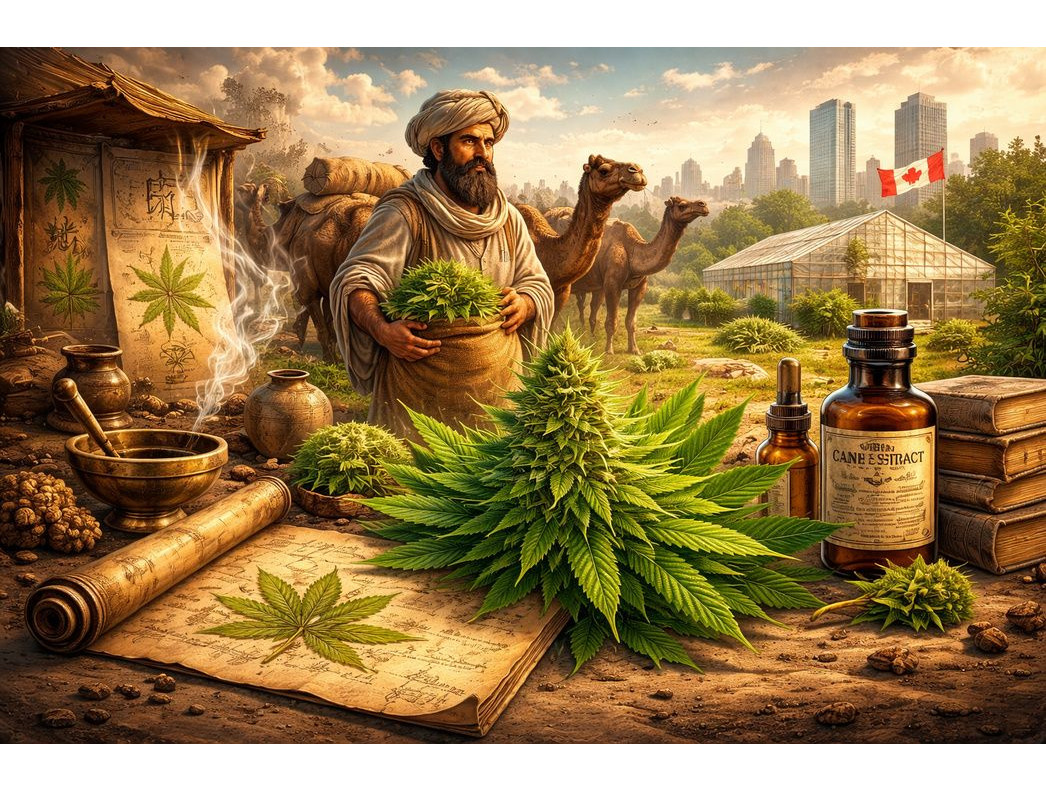
The History of Cannabis
From Ancient Medicine to Modern Industry
Cannabis is one of the oldest cultivated plants in human history, with a story that spans thousands of years, multiple civilizations, and a wide range of uses. Long before modern debates around legalization and regulation, cannabis played an essential role in medicine, agriculture, spirituality, and trade across the world.
Ancient Origins
The earliest recorded use of cannabis dates back over 5,000 years to ancient China. Archaeological evidence suggests cannabis was cultivated as early as 3000 BCE for its strong fibers, which were used to make rope, textiles, and paper. Ancient Chinese texts, including the writings attributed to Emperor Shen Nong, describe cannabis as a medicinal plant used to treat pain, inflammation, and various ailments.
From China, cannabis spread throughout Central Asia, India, and the Middle East. In ancient India, cannabis held both medicinal and spiritual significance. It was mentioned in sacred texts such as the Atharva Veda and used in traditional Ayurvedic medicine for digestive issues, pain relief, and relaxation. Cannabis preparations were also used in religious ceremonies, highlighting the plant’s deep cultural roots.
Expansion Through Trade and Empires
As trade routes expanded, cannabis traveled with merchants, explorers, and empires. The plant became a staple crop across Asia, Africa, and Europe. Hemp, a non-psychoactive variety of cannabis, was particularly valued for its durability and versatility. It was used to make sails, ropes, clothing, and even early forms of currency paper.
By the Middle Ages, cannabis cultivation was widespread throughout Europe. Hemp was so important that in some regions, farmers were legally required to grow it to support naval and industrial needs. During the Age of Exploration, cannabis seeds were brought to the Americas, where hemp became an essential crop in early colonial economies.
Cannabis in Western Medicine
In the 19th century, cannabis gained recognition in Western medicine. Extracts and tinctures were commonly prescribed for pain, insomnia, migraines, and muscle spasms. Cannabis was listed in medical pharmacopeias in Europe and North America and was widely accepted as a legitimate therapeutic substance.
However, attitudes toward cannabis began to shift in the early 20th century. Political, social, and economic factors, rather than scientific evidence, played a major role in its prohibition. By the 1930s, cannabis was increasingly regulated and criminalized in many parts of the world, leading to decades of restricted research and widespread stigma.
Modern Rediscovery and Legalization
In recent decades, scientific research and changing public perception have sparked a renewed interest in cannabis. Advances in genetics, cultivation techniques, and medical research have transformed the plant into a highly specialized and regulated industry. Researchers have identified hundreds of cannabinoids and terpenes, deepening our understanding of how cannabis interacts with the human body.
Countries such as Canada have taken a global leadership role in cannabis legalization, creating frameworks that support consumer safety, responsible use, and scientific study. Today, cannabis is recognized not only for its recreational and medicinal potential but also for its historical importance and agricultural versatility.
A Plant with a Long Legacy
The history of cannabis is a story of resilience, adaptation, and rediscovery. From ancient medicine to modern innovation, cannabis has continuously evolved alongside human civilization. As research expands and regulations modernize, the plant’s long and complex history provides valuable context for its place in today’s world, and its potential for the future.